A Shared Default Key on a Major Resort’s RFID Wristband System
If you are staying at a hotel or resort that uses an RFID wristband for room access, read this first. Do not link a credit card or other payment method to your wristband, if the venue offers this option. Be careful about what your wristband can open. A copied wristband may be able to open your hotel room door. I did not test this directly. This warning is based on a weak key that protects the data on the wristband, which this post explains below.
I visited a major indoor water park resort chain property two times. The visits were about one year apart. I paid for both visits. I kept my wristband after each visit. This post describes a security problem I found on the wristband.
What I did
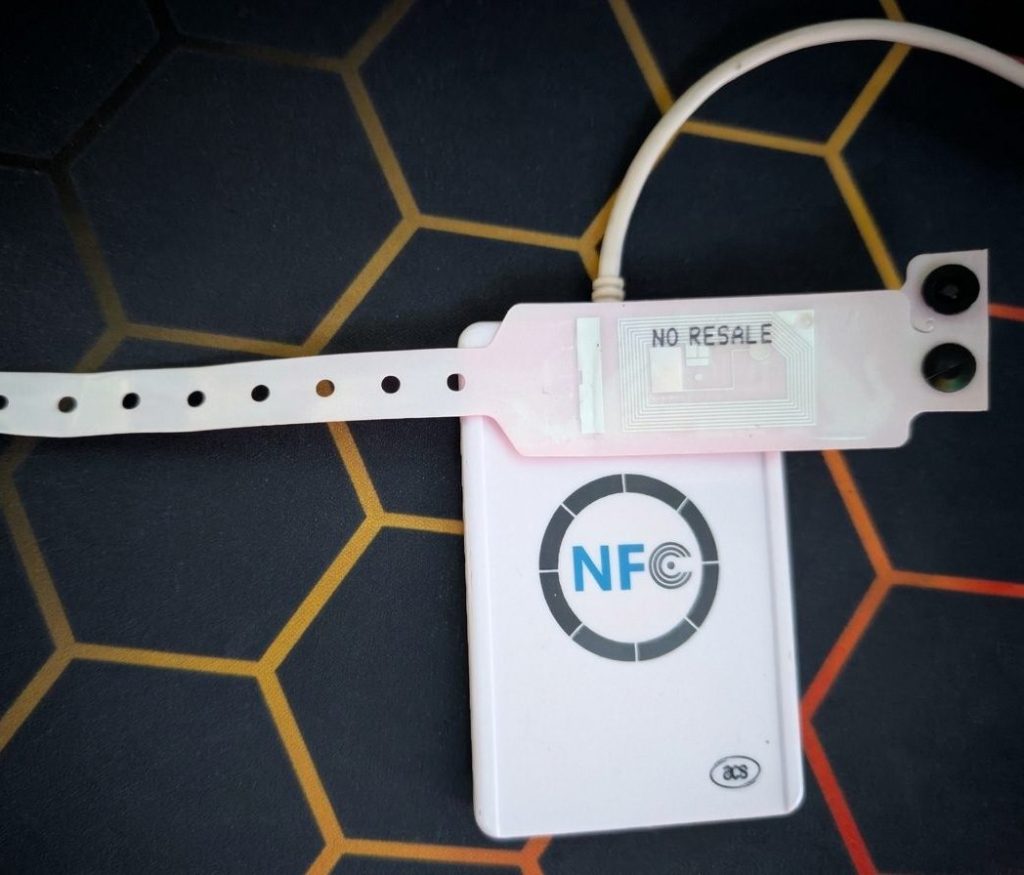
I took two wristbands home. I used a low cost USB card reader. The reader cost about fifteen dollars. I did not use expensive equipment such as a Proxmark3. I ran a tool called mfoc on one wristband. This tool is free and public. It uses a known attack method against this type of card. I did not write this tool. I did not invent this attack method.
I did not change any data on the wristband. I did not write new data to the card. I only read the data that was already there.
I did not confirm what each piece of data means. For example, one field looks like a date and time. I did not check if this field matches the expiration date of a park pass. I did not test any link between the data on the card and any real world result, such as park access or room access.
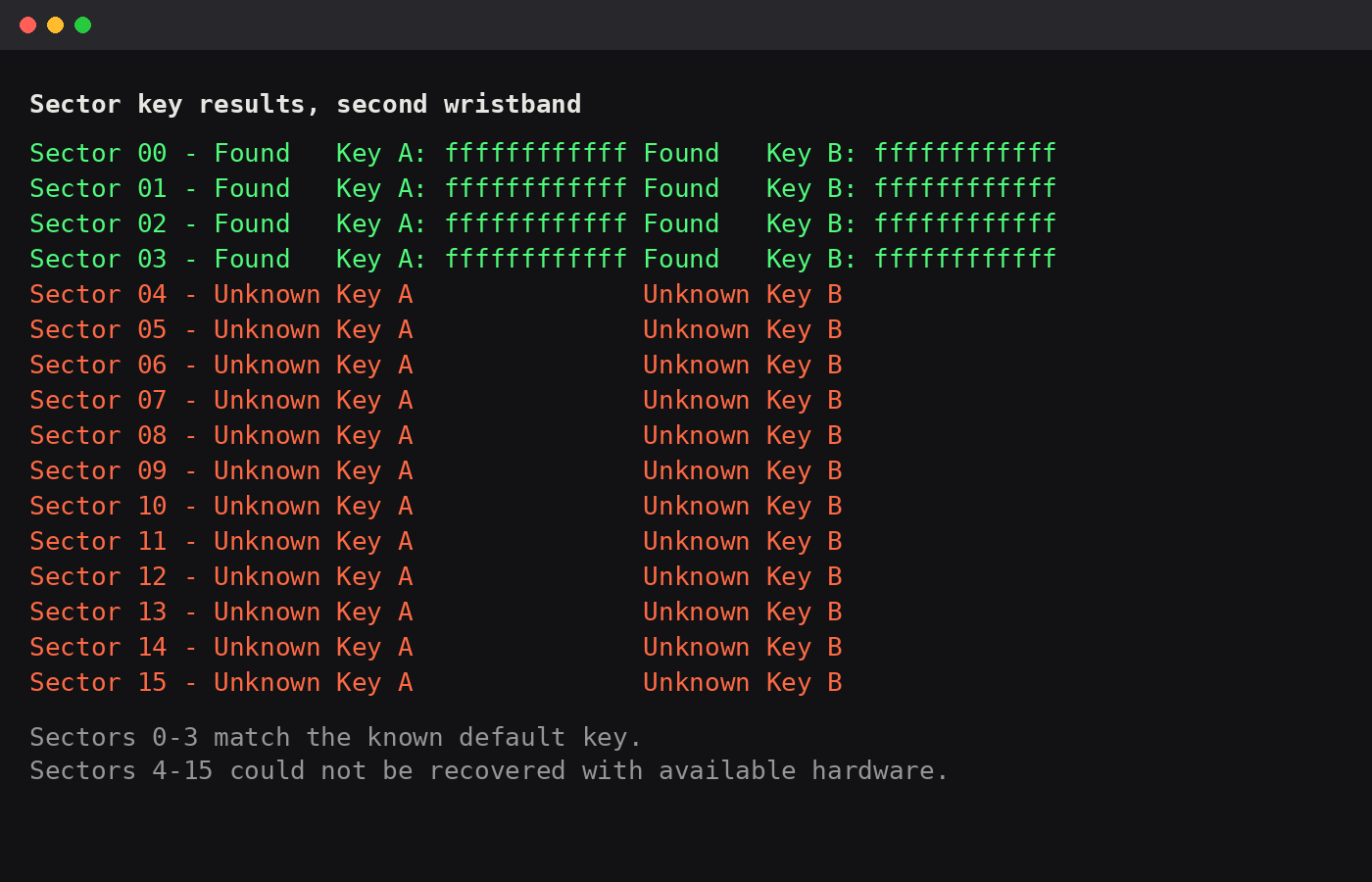
I checked a second wristband from my second visit, about one year after the first. The first four sectors on this card used the same default keys as the first card. I tried the same default key from the first card on sectors 4 through 15. This key did not work on the second card. This suggests the venue changed this key at some point during the past year.
I could not find the new key. Finding this type of key needs specialized equipment, such as a Proxmark3 device. I do not have this equipment. I was not able to go further with the tools I have. This change may be a sign that the venue improved part of their security since my first visit. I could not confirm if the change applies to all cards, or only some of them.
Background on this card type
The wristband uses a chip called MIFARE Classic 1K. This chip has been used for over twenty years. Hotels, transit systems, and other venues use it for access cards. Researchers found a major weakness in this chip in 2008. Tools that use this weakness have been public for many years.
What I found
- All twelve data sectors on the first card use the same two keys. Each key is
000000000000. This key is one of the most common default keys in use. A reader can try this key first and succeed right away. - The card has no key that is unique to this specific card. I tested a second wristband about one year after the first. The first four sectors used the same default keys as the first card. The default key for sectors 4 through 15 did not work on this second card. This suggests the venue changed this key within the past year. I could not recover the new key. This would need specialized equipment, such as a Proxmark3, which I do not have.
- Four sectors on the card still use the factory default settings. The venue’s system does not appear to use these sectors. This suggests the system was set up with default settings, not custom settings.
- Two different sectors on the card contain the same eight bytes of data. This match is not likely to happen by chance. This could be a fixed value that the venue’s system uses to check if a card is valid. I did not confirm this.
- One field contains text that looks like a date and time. I did not confirm what this field controls or if it links to any other data on the card.
Why this is a risk to guests
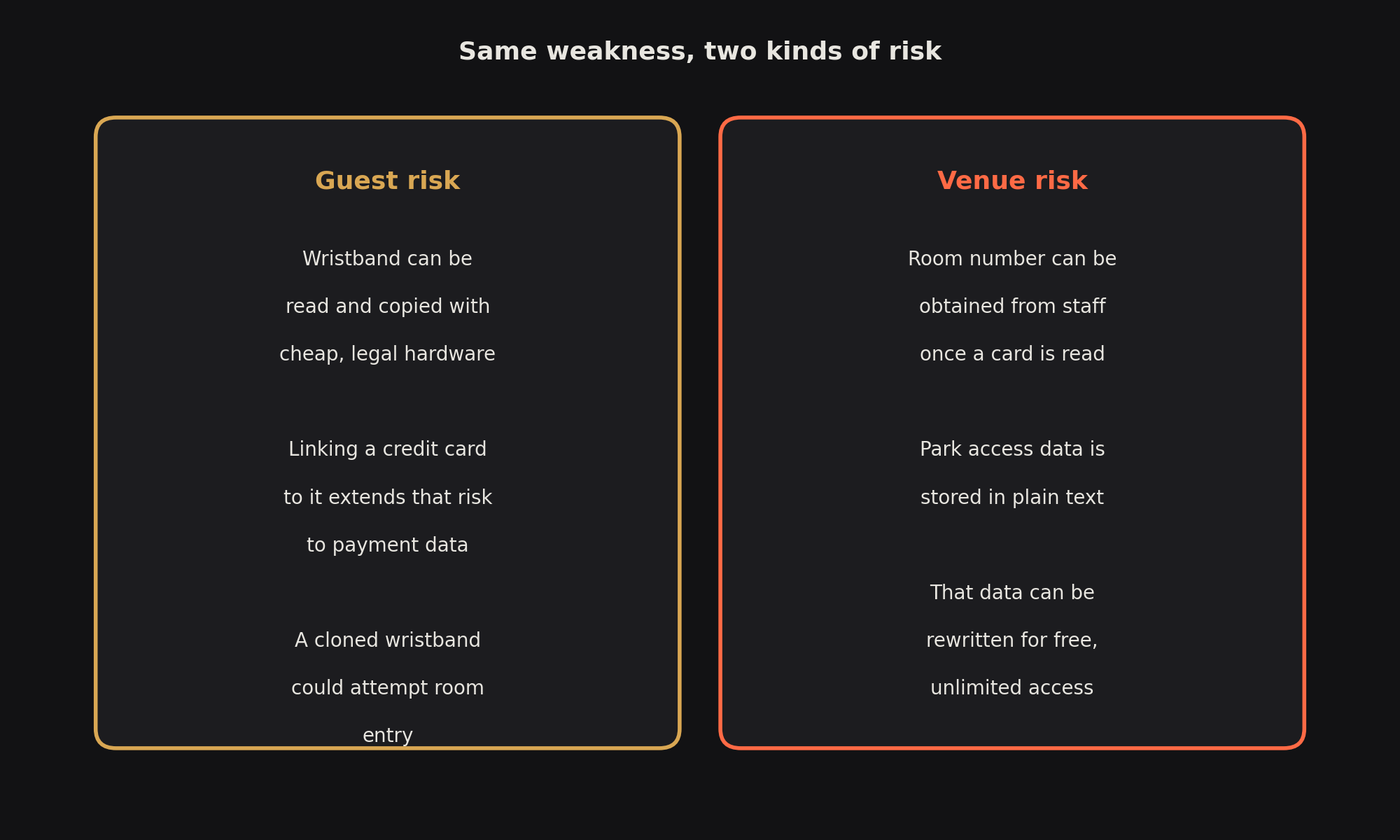
A wristband that uses this card type can be read by anyone with a low cost reader. Guests should know two things.
- Do not link a credit card or other payment method to a wristband, if the venue offers this option. Treat the wristband like a key that may not be unique to you.
- A copied wristband may be able to open a hotel room door. I did not test this directly. I base this on the weak key used across the card.
Why this is also a risk to the venue
The same weakness creates risk for the venue as well.
- Front desk staff may be able to tell a person which room a wristband belongs to, if that person asks and shows the wristband. This would bypass the need to break any encryption at all.
- Some data on the card is stored as plain text, with no encryption. If any of this data controls paid features, such as park access, a person who can write to the card could possibly change it. I did not test this. I did not confirm what any specific field controls.
Both of these risks come from the same root problem. The card system uses weak or missing security on a chip that has been known to be weak for many years.
What venues using this card type should do
- Use a card type that supports a unique key for each card, such as MIFARE DESFire with AES encryption. Do not use one shared key across all cards.
- If a full system change is not possible right away, change the shared key on all cards. Treat all current cards as cards that may already be copied.
- Ask your card system vendor what each fixed value on the card controls. Ask if any check can be tied to the specific card, not a value that is the same on every card.
- Do not store paid features, room numbers, or other important data on the card as plain, unprotected text. If data can be read, it can likely also be changed.
I am not publishing the exact commands I used, the full data dump, or step by step instructions. The purpose of this post is to report the problem and ask for a fix. The purpose is not to help other people copy wristbands.